25 Sep 2026
 Neta·Resume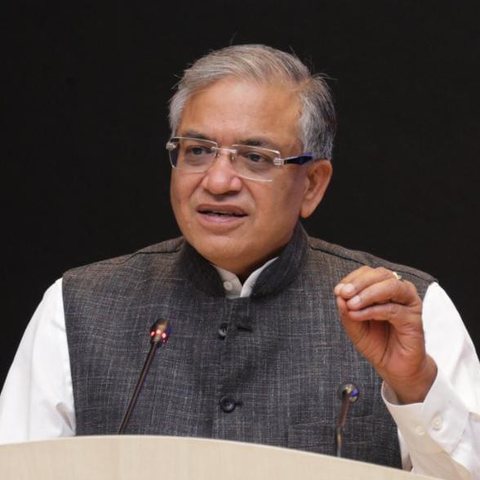
Rahul Gandhi dissented: Asked that the decision wait for the Supreme Court hearing two days later, objected to the Chief Justice's removal from the panel in a dissent note, and did not take part in further proceedings. He published the note the next day.
Adhir Ranjan Chowdhury dissented: Recorded dissent on procedure: 212 names sent the night before and a six-name shortlist eight to ten minutes before the meeting. He said he had nothing against the two appointees. source ↗ response ↗
Education: B.Tech Civil Engineering, IIT Kanpur; Business Finance, ICFAI; Environmental Economics, HIID, Harvard University - per ECI profile
The source lists these without dates. They appear in the source's order.
The Supreme Court disposed of the petitions against the Bihar SIR, holding the exercise traceable to Section 21(3) of the RP Act, 1950 read with Article 324, proportionate, and consistent with the 1960 Rules. It upheld the document regime as within the Commission's discretion (Aadhaar having been added by its 8 September 2025 order) and said the Commission may make a limited, electoral-only inquiry into citizenship. It directed that people deleted as non-citizens be referred within four weeks to the competent authority under the Citizenship Act.
Relevant to the Form 6 dispute: the judgment discusses the Commission's power to design SIR documentation, not whether the statutory Form 6 in the Rules may be altered without a Government notification. No ECI instruction on the four-week referral direction was found.
On the SIR's legal basis, raised in the debate: the Supreme Court's later judgment of 27 May 2026 on the Bihar SIR traced the Commission's power to Section 21(3) of the RP Act, 1950.
See all charges and answers →The Supreme Court's judgment of 27 May 2026 concerned the Bihar SIR; it held that exercise traceable to Section 21(3) of the RP Act, 1950.
See all charges and answers →